
 by Sukunj Realty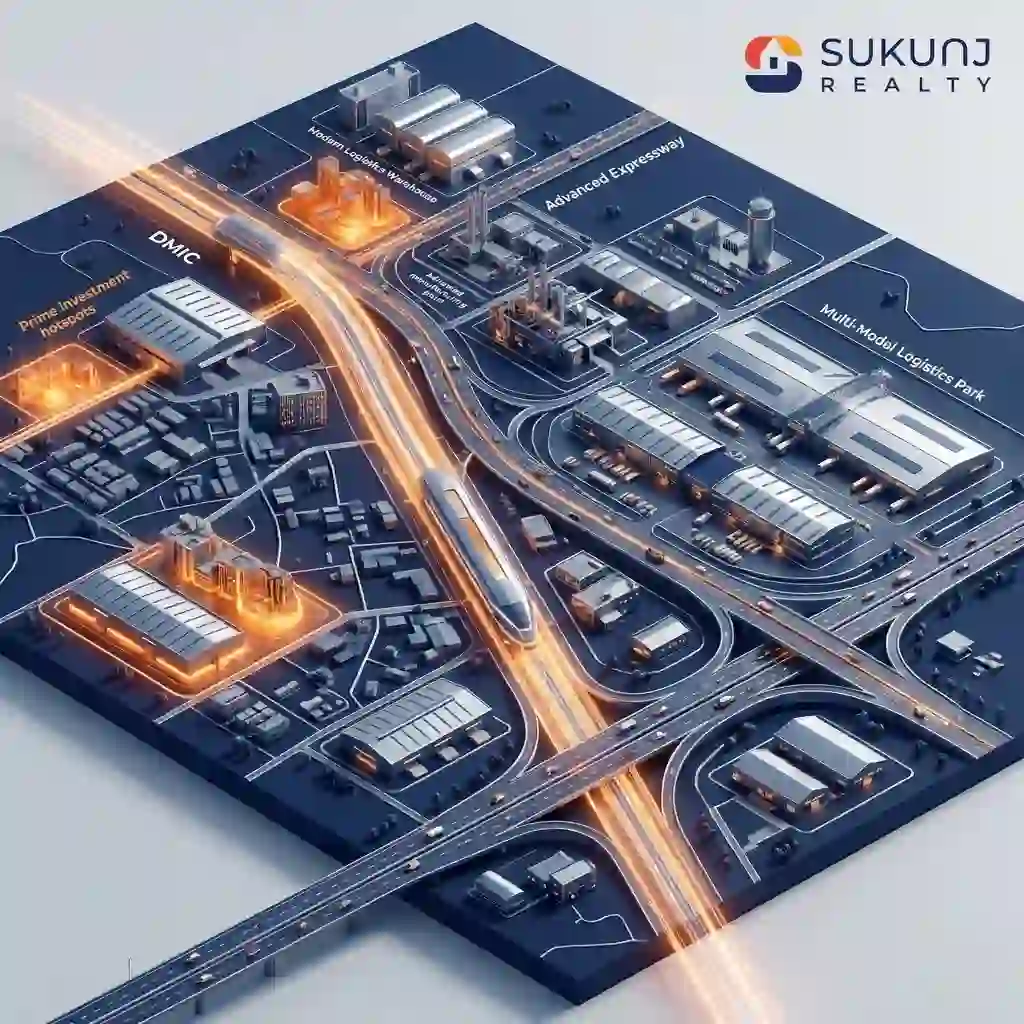
DMIC in Indore 2026 Multiplies Commercial Wealth
The 2026 commercial property landscape in Central India is experiencing a massive and highly lucrative structural shift. With recent government land ordinances drastically accelerating land acquisition and infrastructure development, the demand for premium logistics, warehousing, and commercial spaces has reached unprecedented levels.
At the very center of this wealth-generation cycle is one defining mega-project. As the CEO of Sukunj Realty, I am watching institutional capital and high-net-worth individuals aggressively target this specific economic corridor.
In this comprehensive guide, you will discover exactly how the DMIC in Indore is permanently transforming the regional economy. I will break down the latest master plans, reveal the most profitable commercial investment hotspots, and show you exactly where to park your capital for maximum, long-term returns in today’s rapidly maturing market.
Unpacking the Scope of the Delhi-Mumbai Industrial Corridor
The Delhi-Mumbai Industrial Corridor (DMIC) is not just a highway; it is the most ambitious infrastructure program in India’s modern history. Designed to create a robust manufacturing and service base, it seamlessly connects the political capital with the financial capital.
For the Indore property market, this represents a golden era of commercial expansion. The corridor passes directly through our region, anchoring the highly anticipated Pithampur-Dhar-Mhow Investment Region (PDMIR).
This massive node is designated as a model industrial corridor of international standards. It is actively turning the outskirts of our city into a global trading and manufacturing powerhouse.
How the DMIC in Indore is Catalyzing Logistics
One of the most immediate impacts we are witnessing in 2026 is the explosive growth of the logistics sector. The development of the Multi-Modal Logistics Park (MMLP) near Pithampur is already drawing massive early investments from major national freight forwarders.
Because of this, the demand for Grade-A warehousing spaces along the corridor has skyrocketed. Commercial real estate in Indore 2026 is no longer just about retail shops and office spaces; it is heavily weighted toward industrial and logistical infrastructure.
The recent land ordinances passed by the state government have further sped up this industrial corridor project. By removing bureaucratic bottlenecks for land acquisition, these ordinances have given developers and investors the confidence to pour capital into large-scale commercial land parcels.
Transforming Pithampur: The Engine of Central India
Pithampur has traditionally been an industrial stronghold, but the DMIC integration is elevating it to a completely new tier. The Pithampur Development Plan 2035 is fully aligned with the DMIC’s objectives, creating heavily structured, RERA-compliant investment zones.
As businesses flock to set up manufacturing units, the ripple effect on surrounding real estate is profound. We are seeing a massive need for ancillary commercial real estate—from corporate office parks to heavy vehicle parking facilities and business hotels.
The Role of the Pithampur-Dhar-Mhow Investment Region (PDMIR)
The PDMIR is the crown jewel of the DMIC in Indore. According to the Environmental Impact Assessment and master plans, this region is being developed with a focus on high-axle load dedicated freight connectivity.
This means businesses operating here can transport goods to major ports in a fraction of the traditional time. For real estate investors, acquiring commercial land within the designated PDMIR zones is currently one of the most secure ways to guarantee high rental yields.
Corporate entities are aggressively leasing these spaces, leading to zero-vacancy rates in prime logistics parks. If you are looking for investment hotspots, the inner rings of the PDMIR should be at the absolute top of your portfolio strategy.
Analyzing Commercial Real Estate ROI in 2026
To truly understand why the DMIC is transforming the market, we must look at the hard data. The collector guideline values in the intersecting villages around the corridor have seen strategic upward revisions, reflecting the true market demand.
As the CEO of Sukunj Realty, I advise my clients to look beyond traditional asset classes. The highest wealth multipliers in 2026 are found in specialized commercial developments tied directly to the DMIC’s operational needs.
Below is a structural breakdown of how different commercial asset classes are performing along the corridor:
- Grade-A Warehousing & Logistics: Demand Driver: E-commerce expansion and the new Multi-Modal Logistics Park.
- 2026 Yield Expectation: 8% to 11% annual rental yield.
- Capital Appreciation: Exceptionally high due to rapid land scarcity near major nodes.
- Industrial Land Parcels (CLU Approved):
- Demand Driver: New manufacturing setups backed by the recent land ordinance.
- 2026 Yield Expectation: Primarily capital appreciation plays, seeing 15-20% YoY growth.
- Capital Appreciation: Strategic long-term holds before institutional buyouts.
- Commercial Office Spaces (IT/ITES):
- Demand Driver: Corporate headquarters shifting near manufacturing bases for operational efficiency.
- 2026 Yield Expectation: 7% to 9% annual rental yield.
- Capital Appreciation: Steady growth, highly dependent on proximity to transit hubs.
Navigating Land Use and DTCP Zoning
Investing in commercial real estate requires flawless legal due diligence. The Pithampur Development Plan 2035 has strict zoning regulations overseen by the Directorate of Town and Country Planning (DTCP).
Buying agricultural land with the hope of commercial use is a gamble unless you understand Change of Land Use (CLU) protocols. The DMIC’s economic corridor impacts over 65 villages, and knowing exactly which khasra falls under the industrial or commercial zone is the difference between a stranded asset and a highly profitable investment.
Smart City Integration and Corporate Social Responsibility
The DMIC development is not strictly industrial; it includes massive social infrastructure. The Integrated Investment Regional Development Authority (IIRDA) is mandating the creation of vocational training institutes, 100-bedded hospitals, and comprehensive CSR programs.
This holistic development ensures that the workforce remains stable and localized. For commercial real estate investors, this means the micro-markets surrounding these industrial hubs will inevitably see a surge in demand for affordable retail and daily-need commercial spaces to serve the growing population.
Strategic Timing for Institutional and Retail Investors
The window for early-mover advantage is closing. While the initial phases of the DMIC were conceptual, 2026 is the year of aggressive physical execution. The roads are being laid, the logistics parks are signing early investors, and the land ordinances have removed regulatory friction.
If you are evaluating real estate in Indore 2026, pivoting your focus toward the western industrial corridor is a statistically sound strategy. The sheer volume of government and private capital pouring into this specific geographic strip guarantees sustained economic momentum for the next decade.
Whether you are looking to acquire a 1-acre industrial plot or invest in a pre-leased Grade-A warehouse, the commercial property market in Indore has never offered a more secure foundation for wealth generation.
Frequently Asked Questions
How is the DMIC impacting property prices in Indore?
The DMIC is driving massive demand for commercial and industrial land, particularly in the Pithampur-Dhar-Mhow region. This institutional demand is causing commercial land valuations and rental yields to appreciate significantly faster than traditional residential sectors in 2026.
What is the Pithampur Development Plan 2035?
It is the master zoning blueprint that dictates land use across the region. It clearly defines industrial, commercial, and residential zones, ensuring organized growth around the DMIC and preventing haphazard, illegal developments.
Are logistics parks a good real estate investment in 2026?
Absolutely. With the rise of the Multi-Modal Logistics Park near Indore and booming e-commerce, Grade-A warehousing and logistics parks offer some of the highest and most stable rental yields in the current commercial real estate market.
How does the recent land ordinance affect buyers?
The recent land ordinances streamline the acquisition process for major industrial projects. This reduces legal delays for developers, speeds up infrastructure delivery, and provides a safer, more predictable environment for commercial real estate investors.
ACTIONS & CONVERSIONS
Capitalizing on the monumental growth of the DMIC requires more than just capital; it requires elite local intelligence and flawless legal execution. At Sukunj Realty, we specialize in helping investors safely navigate the complexities of the Indore commercial real estate market. From identifying high-ROI logistics parcels in the exact DTCP-approved zones to ensuring absolute RERA and CLU compliance, our team mitigates your risk while maximizing your wealth. Do not leave your commercial investments to chance in this fast-moving market. Connect with our expert consultation team today by visiting www.sukunj.com or calling us directly at +91 7880001686 to secure your stake in Central India’s most lucrative economic corridor.